I honestly don't understand all these quality sacrifices just to make things thinner. It makes the product actually feel somewhat cheap and brittle.
The same thing confuses me with smartphones. Everyone keeps making these bacteria and finger print magnets thinner... the minute you drop it, it's shattered or unuseable... and so then you're buying a case to protect it from scratches and shatter... so what's the point of making it thinner in the first place? Gimmicks IMO just to sell things year over year without adding real value or actual features.
Especially in cases when it doesn't need to be thinner. I just tried out a Apple Magic Keyboard, which is a razor blade for some reason, and had wrist pain within a few hours of using it. Everybody's different, but this keyboard is trash. It is designed solely to look pretty in marketing photos.
I'm not a keyboard snob. I don't need Cherry MX Blue's to be happy. I thought the Apple Wireless Keyboard (with the AA batteries) was probably a step in the wrong direction, but still fine to type on. But this is quite literally painfully bad. And there was no reason for it, it's not a portable product, it doesn't have heat sinks, screens, fast processors, etc. It's just a keyboard, it would be fine if it's 2mm thicker. Actually it would be better.
I am currently using this horrible keyboard. Hate this thing. Before I've been using a mechanical keyboard, but coworkers complained that it was too loud. I like loud keybords. The sound is so pleasant and satisfying I want it to be even more intense. I want to feel vibration every time I hit the key. And when I hit enter I want there to be a minor earthquake.
This apple trash keyboard doesn't have Shift+Insert. The alt is next to ctrl and it's place is taken by cmd. I had to change my bindings for i3. Caps lock isn't solid and instead of caps + f, I oftentimes type simply f, because caps is released too soon. (caps is rebinded to ctrl and caps + f means select suggested autocompletion). Enter is small.
Actually, I will apply for new keyboard this very day, right now. It will be regular mashed potatoes keyboard, but it's still going to be better than this.
The Microsoft Sculpt Ergonomic Keyboard does not have loud switches, but feels much better than the Magic Keyboard. Only the function keys are not great.
Microsoft has released consistently good hardware for over 20 years now. There have been a few duds over the years but by and large their input devices have been stellar.
The ergonomic/natural/arc keyboards are, by far, the best products Microsoft ever sold. I do love the Apple trackpads, however. There is no better way to work on a Mac.
As for my Linuxing, I have a Unicomp "Battleship" (PC122 keyboard) that's loud as hell, but has the best feel since the beam spring keyboards God added to the IBM 3270's when it made them in the 6th day.
I'm still rockin' the original Microsoft Natural on my workstation. My current motherboard has a PS2 keyboard connector, but I have a USB-PS2 adapter if/when the day comes to upgrade.
I originally bought three of them, and two are still working good.
I also recently bought one of the new Microsoft keyboards, and the feel on it is still pretty good.
Trackball is way better than any trackpad for me. I have three Microsoft Ergonomic keyboards. Two of the Surface ones and one of their cheaper ones which is about $20 at a BestBuy.
The thing with the trackpad on Macs is the gesture thing. Swiping desktops, zooming out on all windows, the "3D" click... The fluid way it allows me to work is priceless.
+1 for the sculpt ergonomic, the older black version (with external numpad) and newer surface version are both great.
The newer surface version is mostly better because it has an Fn key instead of a physical switch to go between media keys and F1, F2, etc.. plus real home/insert/end/arrow keys. I do wish they left the numberpad separate though, as it increase the distance to my mouse/trackpad and I preferred to just get rid of it, as personally I never use it. But many people also like to have it...
Newer version is also bluetooth which is great on mac, but less great on windows/linux as you don't get bootloader support.
+1, the sculpt keyboard and even mouse are my daily drivers at both desks and very well priced.
After a quick key remap on MacOS and a bit of muscle memory adjustment on finger placement that was well with it, my typing speed hasn't suffered and hands are happy. I do wish MS made Mac drivers. No Mac keyboard can hold a candle to this kbd.
I tried the my much more expensive kinesis freestyle with the trimmings - it was nice but too slow to type on because of the keys.
The dream keyboard would be a MS sculpt cut in half like a kinesis freestyle 3, maybe with apple keys that work, and wireless halves.
Counter-point, I haven't had a single Apple keyboard fail on me yet (although I do not own the new Macbook, so I don't have the dreadful one) and my Matias broke after just 1 year.
Matias talks a good game, but we bought 30 of their keyboards and they didn’t last very long. We had much better luck with Logitech. Also, we are batting a 1000 on broken butterfly keyboards. It is really disappointing and frankly the feel of the things is awful.
Matias? Keys just stopped working. We cleaned them (we have people who are trained techs) and they still just stopped working. Two of the keyboards just stopped working for everything. It was weird. Plus they were really cheapish build quality.
Using a custom order WASD keyboard on the workstation and butterfly v2. on an MB. Can't say one is worse than another. The worst thing about Apple's keyboard is botched up layout, rather than any haptics problem.
(Also, it's a huge improvement over the old-style far-apart, mushy blocky Apple keys).
>Especially in cases when it doesn't need to be thinner. I just tried out a Apple Magic Keyboard, which is a razor blade for some reason, and had wrist pain within a few hours of using it. Everybody's different, but this keyboard is trash. It is designed solely to look pretty in marketing photos.
If you're talking about the keyboard on the new MacBook Pros, yes, it's trash.
If you're talking about the standalone keyboard actually called "Magic Keyboard", then I disagree, it's perfectly done, and a pleasure to type on.
And I own several mechanical keyboards (and have started as back as to be using Sun's own keyboards on Spark workstations).
That keyboard was good. It's replacement is worse, but only moderately worse, so it's got less attention than the train wreck that is the Macbook and Macbook Pro keyboards.
I would assume he is talking about the Magic Keyboard 2.0 which is the newer version of that one. It is widely considered to be an excellent keyboard and many people (rightly in my opinion) don’t understand why they just don’t put that keyboard in their laptops. I type on the MK2.0 and love it but keyboards are a personal thing and there any many thin style ones that I just can’t type on, and don’t get me started on “mechanical” keyboards, awful, loud, dreadful RSI inducing things (for me).
I have borrowed one from a colleague, because I like to swap keyboards every now and then for variation and the old Apple Wireless Keyboards were ok. I also had wrist pain within hours with the Magic Keyboard. This is a huge difference compared to the unassuming Microsoft Sculp Ergonomic Keyboard, which is not only cheaper but really feels nice in comparison. It also has genuinely useful features such as reverse tilt, a magnetic battery door, a split, and wide spacebars. Plus it has full-size arrow keys (though I don't use them much, because vim/evil).
Short-travel keyboards are, by some studies, less likely to cause RSI than typewriter-style longer-travel keyboards. At the very least, there is reason to question why emulating the key travel of a mechanical typewriter linkage makes sense versus short travel, or even no-travel haptic feedback.
I think Apple's keyboards, when they work, work really well. And you can get them without number pads so your hand isn't traversing a wasteland of wasted keys to get to the mouse.
>I honestly don't understand all these quality sacrifices just to make things thinner. It makes the product actually feel somewhat cheap and brittle.
It's easy: every time people had the chance to buy thinner or thicker products, they flocked to the thinner ones.
The complaints are random outliers around the internet, but the actual Apple's sales numbers (record years after record years and reduced sales for thicker older designs) speak for themselves.
Not just some "vacuous" "non-technie" users either (as the stereotype says).
Can you guess who said the following words about his MacBook Air for example?
Quote:
"I’m have to admit being a bit baffled by how nobody else seems to have done what Apple did with the Macbook Air – even several years after the first release, the other notebook vendors continue to push those ugly and clunky things. Yes, there are vendors that have tried to emulate it, but usually pretty badly. I don’t think I’m unusual in preferring my laptop to be thin and light.
Btw, even when it comes to Apple, it’s really just the Air that I think is special. The other apple laptops may be good-looking, but they are still the same old clunky hardware, just in a pretty dress.
I’m personally just hoping that I’m ahead of the curve in my strict requirement for “small and silent”. It’s not just laptops, btw – Intel sometimes gives me pre-release hardware, and the people inside Intel I work with have learnt that being whisper-quiet is one of my primary requirements for desktops too. I am sometimes surprised at what leaf-blowers some people seem to put up with under their desks.
I want my office to be quiet. The loudest thing in the room – by far – should be the occasional purring of the cat. And when I travel, I want to travel light. A notebook that weighs more than a kilo is simply not a good thing (yeah, I’m using the smaller 11″ macbook air, and I think weight could still be improved on, but at least it’s very close to the magical 1kg limit)."""
"Not just some "vacuous" "non-technie" users either (as the stereotype says)."
Actually, Linus comes off to me as particularly non-techie. He obviously cares about it enough to get the work done but couldn't care about it more than that. Not even the OS (outside of the kernel) is of any interest to him (dissing debian because he thinks the installer is too cumbersome etc.).
Compare the MacBook Air with the lenovo x-series at the time and it's quite hard to see what the air actually brought to the market except for first in class non-replaceable batteries and few external ports.
You've always been able to get silent computers, but Linus doesn't have the interest to research them.
>Actually, Linus comes off to me as particularly non-techie. He obviously cares about it enough to get the work done but couldn't care about it more than that.
Non tinkerer is not the same as non-techie.
In fact I'd call tinkerers the par-excellence non-techies. They don't do anything technologically productive (much less write their own kernel), they just play with tech toys.
you are confusing coincidence with causation, there is no evidence that apples record sales numbers (which seem to be at an end anyhow) have much to do with making things thinner to the point of fragility.
a) "clearly being an asshole makes me steve jobs right"
I never claimed any causative chain of that sort. I said that thinner continued to sold in droves, not that making something thin necessarily will make it sold.
b) "or at least it cant hurt! right?"
That's closer to what I said, which is the continuously thinner products never hurt Apple's sales.
And to answer your question, yes, obviously it can't hurt in someone becoming like Steve Jobs -- since it didn't hurt Steve Jobs himself. In fact, if anything, it could have been necessary to Jobs success, and goes with his obsession and attention to detail and crazy push to his employees.
Not really. It's somewhat established that there are more psychopaths as CEOs than in the general population, suggesting it's a good trait to help one "make it".
> It's easy: every time people had the chance to buy thinner or thicker products, they flocked to the thinner ones.
You'll need to back up that statement with factual sources, because clearly all Apple decisions aren't always backed by marketing studies because all their products are not always that successful.
>You'll need to back up that statement with factual sources, because clearly all Apple decisions aren't always backed by marketing studies because all their products are not always that successful.
What marketing studies? I'm talking about marketing results. Their ever thinner laptops remained at the top of best selling laptops in their price class -- selling several times more than the closest competitor ever since Jobs came back to Apple in 1999.
> What marketing studies? I'm talking about marketing results. Their ever thinner laptops remained at the top of best selling laptops in their price class -- selling several times more than the closest competitor ever since Jobs came back to Apple in 1999.
we're talking about phones here, not laptops and correlation is not causation, you didn't demonstrate what you state as a fact.
You seem confused. I'm not trying to establish a causal relationship between thin and sales. I'm stating (it's a fact) that people have flocked to thin products.
We're also not "talking about phones here". The post is about the MacBook Pro keyboard. That's a laptop. You first brought up phones, when you mentioned "bigger screens".
Besides, even in phones, the ever thinning models kept selling very well, whether they had bigger screens or not.
I like how John Siracusa explains the concept of "naked robotic core"
To paraphrase, the phone is the computing unit, and the user customizes it to fit it's usage.
People that never dropped a phone in their life can use it as is. People who work in construction can put hardcore shells that survive multiple floor drops. Those who like furry cases can go wild and those who want to build accessories around the phone have a smaller target to do so.
Seeing it this way, having the phone thin enough than you can put the case you want without the whole package being bulky is a feature.
To touch on the laptops, a few grams shoved off won't matter and don't justify a huge sacrifice. But the size and weight drop we had from the 15" Lombard laptops to today's 15" don't all happen in dramatically, and keeping a goal of having the next machine thinner than the previous one can help achieve huge progress in the long term.
I am not a fan of the current keyboards, but I can't throw them the stone for trying to make things thinner and lighter. I was super happy to see the lighter 2013~2015 models, and I don't want them to just settle and say "we're good enough for the next 20 years, we don't care anymore".
First of all, I disagree that people _want_ to put furry cases on their phones. Too many people have walked around for too long with giant cracks on their screens that they've realised it's better to slap on a case, even with the ugliness that goes with it. Having some minion drawing on the back of the case is just a minor positive.
More importantly though, I cannot stand how glib Apple is with their devices. Surely the engineers and managers in charge _must_ realise the responsibility on their shoulders. Are they OK with many more people contracting carpal tunnel or RSI because of the choices they made? What about the environmental costs of needing to replace perfectly functioning components like speakers just to replace a keyboard? Just for the sake of A E S T H E T I C S?
I don't mind the whole case of notebook being unserviceable for a iFixit prospective. I don't think anyone does. But it must be done to perfection that it doesn't ever need repairing. That means assuming no water spillage, under normal conditions, less then 0.1% of repair are needed in a 4 years timeframe. That is what I think is good enough for a thinner, integrated trade off.
But that is an ideal they never achieved, and they have been let loose for years. USB-C Over Power, Logic Board burnt out, Keyboard failure, Power Supply not working, SSD Failure, Memory Failure, GPU failure, Display Panel problems. The amount of crap we have been putting up with considering they are some of the most expensive laptop in the market, and we are paying the premium really for using macOS.
> Everyone keeps making these bacteria and finger print magnets thinner
I fear it might be worse than that; I have a Moto C, which is nice enough as a cheap phone. But they've made the case out of the slipperiest finish I could imagine, I have a silicone case just to trust I can hold it.
Now, if that's the cheapest finish they could make to get the price bracket they want, fine. But I can't shake the feeling that some designer chose that finish to make it _feel_ thinner. Just like a rough heavy weight paper makes something _feel_ valuable.
If Apple released a new phone or laptop this September and specifically marketed it as being better built and longer lasting (and therefore thicker and heavier), I'd buy it. Am I the only one?
I'd buy a fatter, easier to repair, MacBook Pro (like the old model they still sell), but only if I could order it with 32 GB of memory.
The thing is Macs used to last a very long time. I kept my 2008 MacBook for about 8 years and it was still a fine laptop until the last day. Today, my work requires a little bit more memory and 16 GB doesn't quite cut it anymore.
This is probably why I'm getting a hefty Thinkpad E for a fraction of the price of the laptop Apple can't build yet because thinner parts don't exist.
its not like the change of thickness is a single variable from one gen of a phone to the next. Id wager there are other variables that make people purchase new phones rather than 1mm shaved off.
If sales increase when it is thinner, it stands to reason that customers want thinner devices.
Just because you disagree with them doesn’t mean you’re not wrong for saying there is zero disadvantage. The disadvantage is not giving customers what they want.
> If sales increase when it is thinner, it stands to reason that customers want thinner devices.
This isn't something that can be A/B tested when there's only one (thinner) offering. People "need" to upgrade their devices and will ultimately buy and put up with the newer model even it means trading a decent keyboard, potentially better battery life, or a headphone jack.
This is the usual excuse to justify questionable design decisions. It ignores which information customers use to make their decisions and how we have whole business sectors that do nothing else than control and shape this information. (PR, marketing and advertising)
By the same logic, if a crappy movie (by reviews) nevertheless earns a good profit on the first weekends due to an intense marketing campaign and flashy, misleading trailers, that would magically make it a good movie, because obviously "customers wanted that".
Correlation is not causation. If the only new products in the Apple ecosystem is thinner, have a non-removable battery, no headphone jack, no SD card slot, no magsafe power, then it is easy to reason that all people who brought new Apple products wanted those features. The problem is, they never had the choice.
I'm pretty sure marketers and designers really do know that. How light a device feels in the hand is pretty much the very first thing someone notices when picking up a new device, and sets the stage for the rest of their expectations.
We also know that in most cases (of course not every case) first impressions are a much bigger influence on the final decision to purchase than later analysis and consideration, regardless of what people think about their own decision making process. Pretty much every company that has ever sold anything cares about this stuff, and many of them have plenty of resources, so this has been studies to death for decades. A lot of super smart people have spent a huge amount of time devising very clever ways to test this stuff.
> We also know that [...] first impressions are a much bigger influence on the final decision to purchase than later analysis and consideration
But this is the whole point of the GP's criticism: The whole design of the device is driven by optimizing purchase, not actually by making it usable, useful or durable.
Of course we can know that. Basically all manufacturers save apple have a very long tail of non-flagship phones which nobody really pays much attention to, but which absolutely can answer questions like that. They have dozens of models, mostly basically identical save for minor changes.
"This is design anorexia: making a product slimmer and slimmer at the cost of usefulness, functionality, serviceability, and the environment." (emph. mine)
Spot on. My sister's best friend is currently hospitalized for anorexia so this resonates particularly well with me. Luckily for my friend, she seems to be doing much better from what I've heard. I hope I can same the thing about Apple soon.
> and so then you're buying a case to protect it from scratches and shatter... so what's the point of making it thinner in the first place?
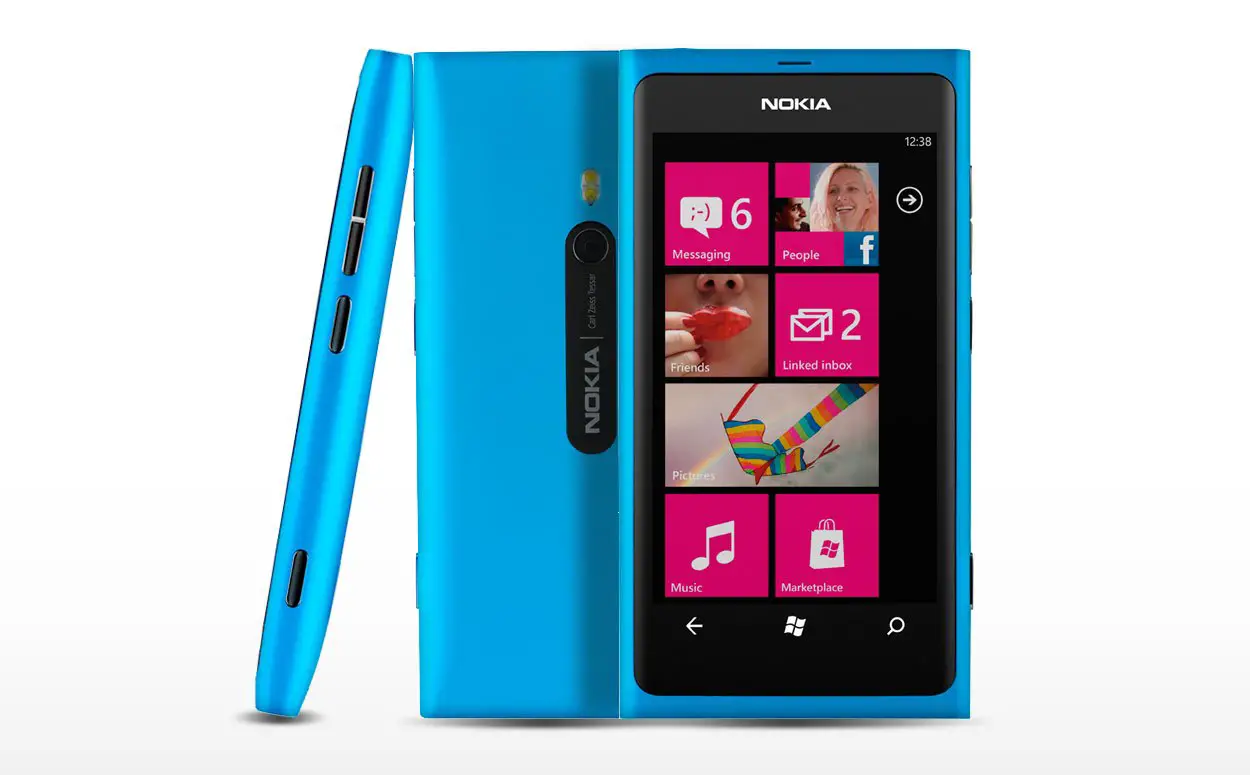
I agree, also in terms of material. I'd love to buy a plastic phone with some bezel that doesn't shatter easily. The Nokia Lumias a couple years back (e.g. the Lumia 800[0]) were good-looking and super robust.
But manufacturers obviously don't have much incentive to make hardware more durable, unless customers explicitly look out for that. And currently, many people tend to buy (high-end) phones rather for prestige reasons than actual usefulness.
I (still) own a Lumia 830 from back then. It's incredible what my phone endured (drops from a car roof, down a few stairs, even a short dive in a kitchen sink), and I don't really know why the thing is so sturdy since it truly looks good. I recently bought a spare display for about 40$ and a battery for 20$, just so I can replace them if anything should happen in the future.
> and I don't really know why the thing is so sturdy since it truly looks good.
One factor is that the cover glass doesn't go all the way out to edges and corners. This leaves some "crumble zone", as phones by the laws of probability most often land on edges.
What do the corners of your phone look like? I bet they're dented, at least that used to be the case for me.
> The Nokia Lumias a couple years back (e.g. the Lumia 800[0]) were good-looking and super robust.
Yes, I have a Lumia 640 here and I really like it from a hardware point of view. It's a shame that it only runs Windows Mobile, I wish so much that I was able to just install Android on it.
Samsung's Galaxy S range of phones have been getting slightly thicker every generation since the S6. The S6 was 6.8mm thick, the S9 is 8.5mm, with small but progressive increases along the way.
The S9 still feels like it could break easy due to the all glass finish, but I think that has much more to do with avoiding plastic whilst still enabling wireless charging.
Up until the 2016 MacBook Pro they managed this trade off well. But this wasn’t a product that was ready IMO, and it wasn’t just the keyboard. The hardware isn’t there yet to support a pro machine this thin. The battery life is worse than in 2015, the CPU performance has serious issues due to thermal constraints, and 32GB of RAM that a huge number of pros want can’t be done because what wiggle room they had for battery life they wasted on frivolous bullshit. I’m hopeful that they get this turned around soon, but aside from the keyboard they basically just have to wait for Intel to fix their problems for them.
> I honestly don't understand all these quality sacrifices just to make things thinner. It makes the product actually feel somewhat cheap and brittle.
I never understood this. I read often in reviews about how the weight of something makes it feel more expensive and "premium". For something you're carrying around all the time, you want it to be light and manufacturing something light is usually going to be more expensive.
Do I want it to be light? Sure, I wouldn't want to carry a brick of tungsten with me, but something the weight of two or three iPhones isn't much of an encumbrance even to people much physically weaker than me.
If they're making the phone thicker solely to make it not shatter, what you're doing is just building in a factory phone case, which you then can't easily remove or replace. So why not just let people buy their own cases that suit their needs?
This is what you see from a consumer perspective. But from a company perspective, going thinner as way more benefits. Apple invested a lot in R&D to make things thinner, but when it comes to manufacturing products in mass, Apple is actually making more and more money year after year by building a thinner version of a model. They’re saving money (cost of materials) while increasing or maintenaing their selling price. It’s a win for them.
"I honestly don't understand all these quality sacrifices just to make things thinner. It makes the product actually feel somewhat cheap and brittle."
Here's a hypothesis:
For many years, before the iPhone, Apple's computer business was built around keeping its loyal customer base happy. That base would buy new Macs by default, but would stop doing so if the long-term experience of using them went down too far. So Apple focused on long-term quality.
Now, their computer business is built around seducing iPhone users, most of whom who are now using Windows computers, into moving to the Mac world. The vast majority of such users base their decisions on little more than what looks best in the showroom. For that showroom seduction to occur, Macs are better off being the hottest looking computers there. Whether or not their keyboards work for much more than two weeks after purchase is far less important. (14 days being the period of the Apple return policy.)
Another factor: there is little reason for annual or bi-annual replacement of fully functioning computers any more. I'm still happy with my mid-2012 MBP. In the old days, Intel chips got faster according to Moore's law, and new software took advantage of that speed, so you really had to replace hardware at a fairly rapid pace to not experience everything getting slower and slower year-by-year. But the speed of my 2012 MPB is just fine. The situation is night-and-day different than it used to be.
So, once Apple achieves that initial showroom seduction, even if the user doesn't end up being particularly happy with their machine, they probably aren't going to buy another one for 5 or so years anyway. So customer dissatisfaction isn't going to be felt for that much time.
Moreover, from what I'm seeing, customer experience in the Windows world isn't consistently better, so word-of-mouth isn't particularly likely to pull the average user away from the Apple ecosystem and the way everything works together, and years of their emails and documents being stored in the Apple cloud which they'd lose access to, or go which they'd have to through the pain of moving elsewhere.
Overall, if making ever-more money is Apple's only real goal, focusing on thinness over all else is arguably a rational choice, as long as thinness makes Macs look sexier in the showroom.
It might be a racket, like the software/hardware market. Intel and OS/Software manufacturers are in cahoots to constantly design apps that require beefier hardware so that people have to constantly upgrade.
The same might go for cell phone manufacturers. They intentionally leave a market for accessories so that their partners can make more money and to ensure support/staying quiet.
I don't really believe that software developers intentionally write bloated code. It's just that most dev shops only fix performance issues when they become apparent on current-gen hardware.
As hardware gets better and better, the bar for "ok, this is too slow, let's go back to the drawing board optimize it" gets higher and higher.
Skype on my 4-year old phone is laughably slow, but I bet it'd be a lot faster if the devs did not have the latest and greatest in hardware.
Women will buy thinner phones. Fat phone makes you look fat. A delicate slim phone feels better! (kind of joking, but who knows)
Some people, not just women, might think that thinner means more advanced. After all, it's always been somewhat the case in general - remember the old 5kg monitors? Now you have flat LCDs.
I, however, am uncomfortable with thin laptop. I don't feel it's safe to put it in the backpack with other things. After all, what if I have to run? Will it endure the jolting? What if somebody bumps into me from behind in a crowded place? Probably it will be fine, but it is still somewhat unnerving.
But manufacturers want to make stuff that breaks. If it doesn't the you sell little. It can't be really bad, because then you'll get bad reputation, but if it's too good then you'll be outcompeted. I think it's possible to make a laptop that most likely will never break and will remain upgradeable for the next 50 years. But it would require cooperation from many hardware manufacturers because every part would have to be made with quality in mind, instead of profit and scalability.
We will not cooperate because we don't really need high quality laptops. What we have is good enough.
Gimmicks are easy to add. Some of the most annoying are touchscreens. Why on earth would you need a touchscreen on a laptop? Touching screens makes you look like an idiot. Remember those silly stock images of high tech where people touch holograms? I never liked them. It's like trying to sell electronics to apes. You don't explain, you show with gestures how you can interact with this thingy.
Actually annoying is not the right word. They make me feel uncomfortably superior. I don't know why.


The same thing confuses me with smartphones. Everyone keeps making these bacteria and finger print magnets thinner... the minute you drop it, it's shattered or unuseable... and so then you're buying a case to protect it from scratches and shatter... so what's the point of making it thinner in the first place? Gimmicks IMO just to sell things year over year without adding real value or actual features.