> The potential of Emacs comes from the huge number of excellent third-party extensions
Yes, but you wouldn't have that many excellent extensions without Emacs being a great Elisp IDE. I recently compared PyCharm (I had to purchase it for work) with Emacs and the number of plugins for the former is negligible in comparison. I think that this is because writing extensions/plugins for PyCharm is so much harder than for Emacs: no scratch, no built-in API docs, no full blown book on scripting (like Elisp info), no macro->defun ability, no defadvice, no find-function/find-library and so on and on and on...
Of course, the other reason may be the fact that Emacs has 30 years worth of code written for it :) but I think without matching Emacs extensibility features no editor will ever come close to it in terms of extensions. LightTable looks promising in this regard, so does Atom, but other than these all editors/IDEs look like they don't treat extensibility seriously. Which is why I'm still using Emacs as my primary workspace.
> Did you know that there is a really powerful PDF
You mean with DocView mode? Yes, I knew it (and it's built-in, not 3rd party). I also knew about Calc (http://nullprogram.com/blog/2009/06/23/), about Calendar, about proced, about dired and wdired, about VC, about ediff and emerge, about ctags/etags, about artist-mode, about rmail and gnus, about TRAMP and eshell and ansi-term...
Do you know how I learned about all of them? I just opened this page: https://www.gnu.org/software/emacs/manual/html_mono/emacs.ht... and started reading. You know, cover to cover, as I'd do with any good book. Of course, along the way I switched to reading it inside Emacs, and I skipped some parts I decided I'm very unlikely to ever use, but I can assure you that it's all there. Perhaps a need for such a book is an Emacs failure in itself (because the interface is not discoverable by itself?), but at least it is there. I know of no other editor (Vim comes close in terms of docs coverage, but it's less neatly structured and harder to read cover-to-cover) which is that well documented.
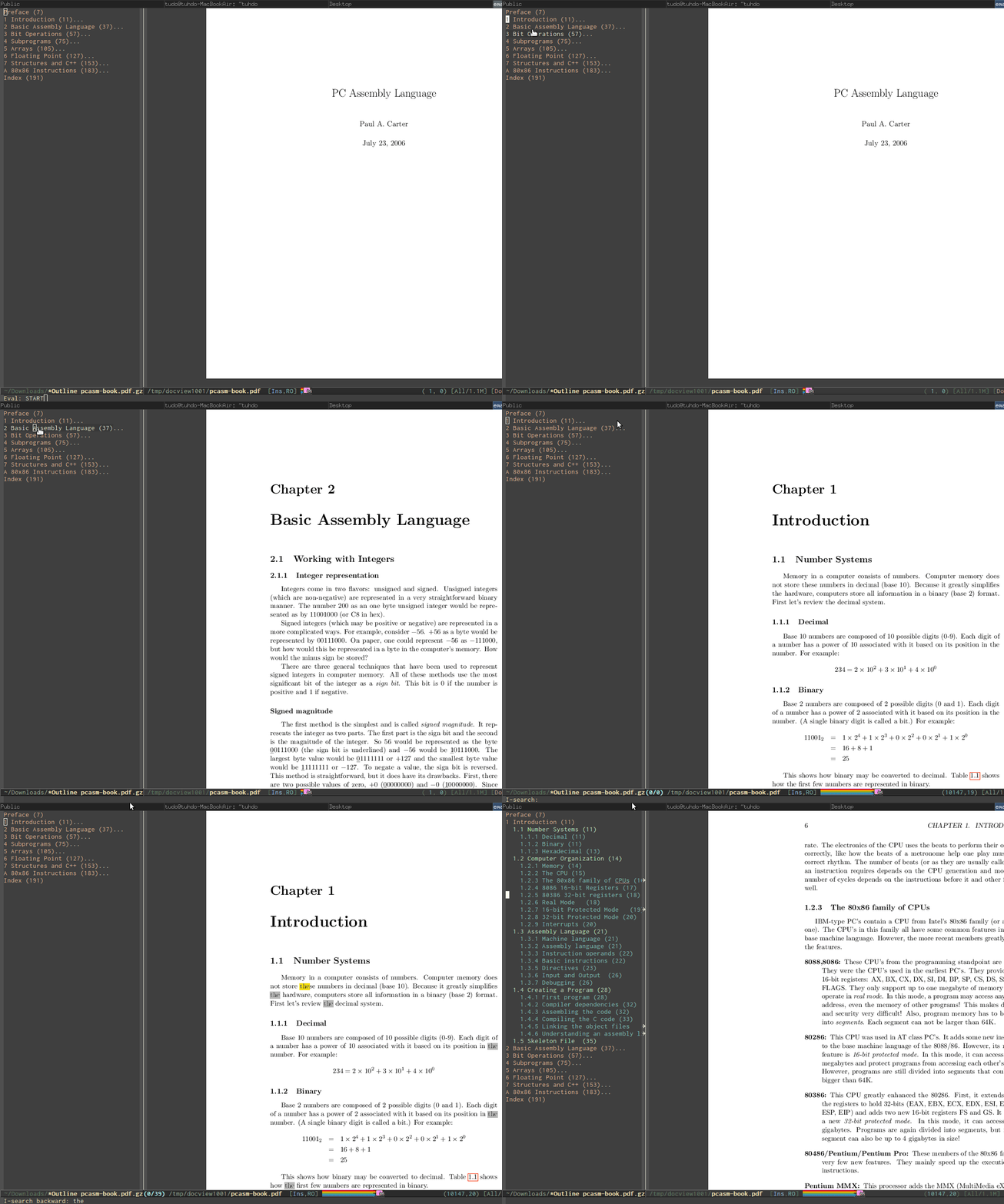
Docview is great, but not enough. He mentioned pdf-tools: https://github.com/politza/pdf-tools, that enhances doc-view with outline for table of contents and annotations.


Yes, but you wouldn't have that many excellent extensions without Emacs being a great Elisp IDE. I recently compared PyCharm (I had to purchase it for work) with Emacs and the number of plugins for the former is negligible in comparison. I think that this is because writing extensions/plugins for PyCharm is so much harder than for Emacs: no scratch, no built-in API docs, no full blown book on scripting (like Elisp info), no macro->defun ability, no defadvice, no find-function/find-library and so on and on and on...
Of course, the other reason may be the fact that Emacs has 30 years worth of code written for it :) but I think without matching Emacs extensibility features no editor will ever come close to it in terms of extensions. LightTable looks promising in this regard, so does Atom, but other than these all editors/IDEs look like they don't treat extensibility seriously. Which is why I'm still using Emacs as my primary workspace.
> Did you know that there is a really powerful PDF
You mean with DocView mode? Yes, I knew it (and it's built-in, not 3rd party). I also knew about Calc (http://nullprogram.com/blog/2009/06/23/), about Calendar, about proced, about dired and wdired, about VC, about ediff and emerge, about ctags/etags, about artist-mode, about rmail and gnus, about TRAMP and eshell and ansi-term...
Do you know how I learned about all of them? I just opened this page: https://www.gnu.org/software/emacs/manual/html_mono/emacs.ht... and started reading. You know, cover to cover, as I'd do with any good book. Of course, along the way I switched to reading it inside Emacs, and I skipped some parts I decided I'm very unlikely to ever use, but I can assure you that it's all there. Perhaps a need for such a book is an Emacs failure in itself (because the interface is not discoverable by itself?), but at least it is there. I know of no other editor (Vim comes close in terms of docs coverage, but it's less neatly structured and harder to read cover-to-cover) which is that well documented.