For the reasons already articulated in the article we're discussing; It's a waste of people's time to reiterate them.
I would add though that one of the top stories yesterday was about how the British Library website has been down for 10 days due to a ransomware attack. Digital information retrieval is only as reliable as your backup strategy.
Let's not forget that even that is prone to problems. I had some archives (30-35 years old) that no longer can be unpacked. The application that made them is no longer working. Source code isn't available. I also had a few "rotting" CDs (not CD-R, but factory pressed CDs). You need a very good strategy to make digital information survive the next 100 years, and keep it up to date, at least yearly.
And, given the performance of government IT projects in the past in so many countries, this will probably turn out to be more expensive than they hope.
I had some Bitcoin on a USB along with the operating system and program used to read the wallet. After 8 years or so, I couldn't open my wallet despite using the same OS and same program but different hardware. (I did eventually recover the coin but it was much harder than I anticipated. and no, the USB wasn't my only copy, I wasn't quite that foolish)
I disagree with you that “Hardware goes out of date” is, in fact, a solvable problem. The truth is, macroscopic writing, in the sense of scratching or applying pigment / dye to a surface, is a very old technology, and we know very well what the revealed points of weakness are, and in many cases, how to avoid these points of weakness. Perhaps most importantly, a minimally-trained individual can recognize the content and potentially the importance of a physical document. This is not the case with modern technologies that require a separate apparatus to be decoded and displayed. In many cases, this apparatus is not available, and it is possible that the layperson will not recognize the reel, cartridge, cassette, slide, disc, drive, wax cylinder, etc, for what it is and simply discard it. This is by far the greatest risk for data preservation.
If we reach a point where people working in the archive don’t know what a computer is, we’re at the point where we don’t need to know what Dave’s will had in it.
Think about what you are protecting here. Dave’s will. Ol’ davo from down pub. Literally meaningless beyond the potential for mild curiosity in a hundred years.
If the worst happened and we lose them, it’s insignificant. Planning for the preservation of davo’s will in the event of an apocalypse is a waste of our time.
What if that is not Dave’s will, but Dave’s first novel? Or the technical manual to Dave’s computer system, where the onboard help files are just a URL that points to a dead server?
Knowledge preservation in the face of disaster is not a pointless effort.
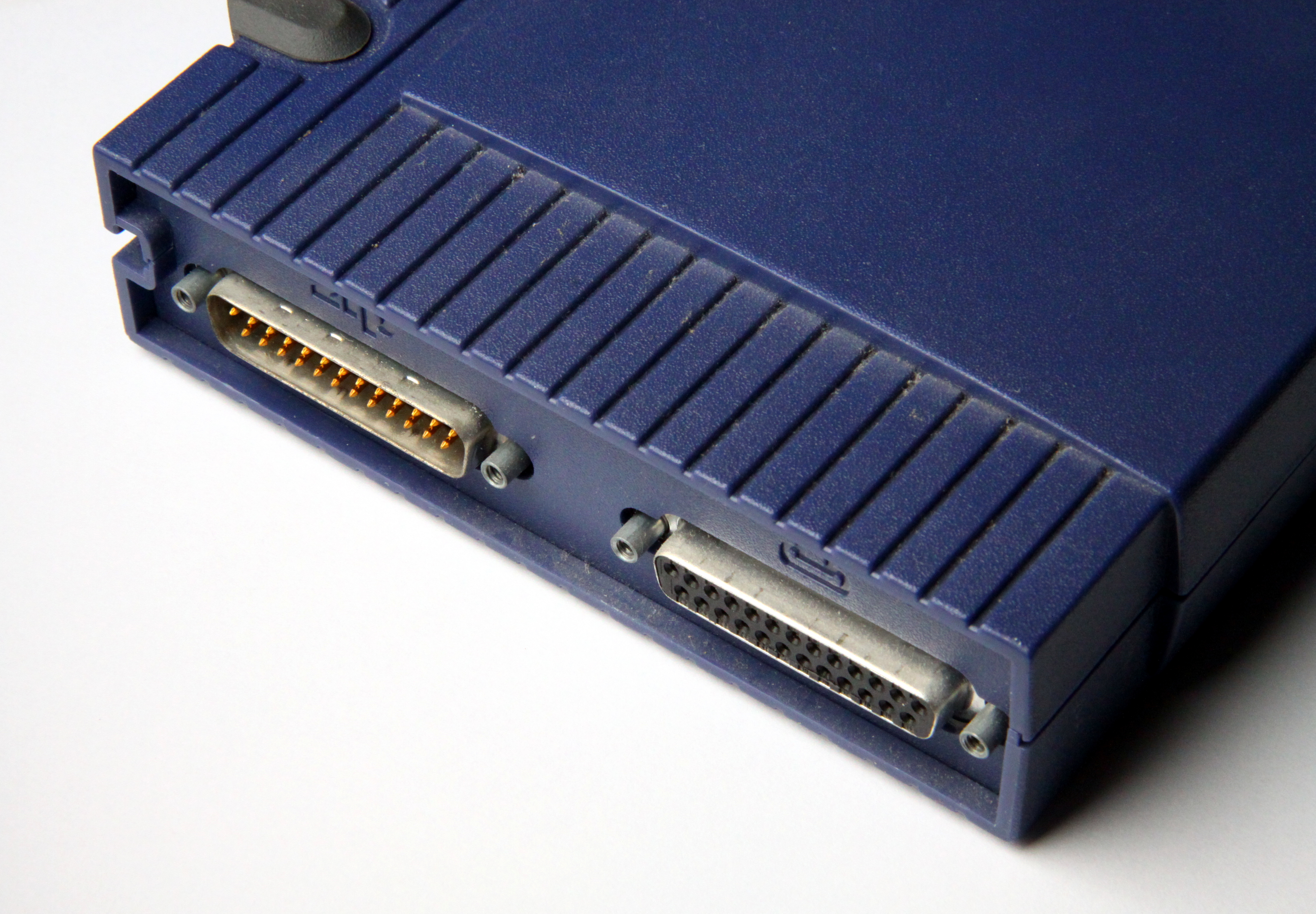
Further, there is a difference between “knowing what a computer is” and “recognizing a specific manifestation of computing technology”. For example, this picture [0]. The URL is somewhat descriptive, but say you were presented with that piece of technology. Would you recognize it? Would you think that it could be important? Would you be able to get it running? For me, personally, it would be a significant effort in terms of time spent… and I certainly wouldn’t be able to recognize it just from that picture.


I would add though that one of the top stories yesterday was about how the British Library website has been down for 10 days due to a ransomware attack. Digital information retrieval is only as reliable as your backup strategy.