I was born and live in Sao Paulo, and this law (Lei Cidade Limpa) really helped to reduce the visual pollution here.
Here are some links for pictures of before/after. For more images, you can search for images of Lei Cidade Limpa SP or Lei Cidade Limpa São Paulo (we use the tilde here, you can remove it if you prefer)
Indeed, after living in são paulo for a while going anywhere else in brazil lead to a slight culture shock.
In a sense this didn't hurt advertisers at all, as the demand for advertisement stayed exactly the same, they just had to change the available media. Think of it as a prisoner's dillema-like situation, where defecting is plastering a huge sign in front of people. It's better for everyone if nobody does that, but whoever breaks the law and does it can get an advantage.
Preventing people from defecting in these situations is exactly the point of a government (regardless of how much I disagree with Kassab's actual politics and would never vote for him).
Are you sure that the policy wasn't designed to transfer control of the outdoor advertising industry to a subset of advertisers? You know... ban advertising, and kill off the existing outdoor-ad only companies. Then reintroduce outdoor advertising, granting permits only to some group of "respectable" advertisers.
I'm not saying that this is the case here, but it's a fair question, I think.
Not really. The ban doesn't apply to indoor ads so isn't applicable to the metro's trains or stations. As for the buses, they aren't displaying ads at all.
Buses are pretty much ads on wheels, --- and in some buses of the green variety [1] there are TV sets broadcasting most relevant content such as government propaganda, the horoscope, news and events, and yes, advertisement.
[1] I'm yet to figure out what the colours mean on buses.
Regarding [1], each bus company has a different color. The companies won different government contracts for different parts of the city, so the east side is roughly red, the south blue, the north-west green, etc.
So they didn't eliminate all signage, but it was rather dramatically reduced.
I grew up in a suburb of Minneapolis that had similar restrictions on advertising, and I can say that it is very nice as a resident. Now when I visit however, I find it difficult to locate some of the new businesses.
I'm curious how this law has affected business revenue from tourists in Sao Paulo.
"Now when I visit however, I find it difficult to locate some of the new businesses."
I'd be shocked if many people, on this site in paritcular, used street ads as their primary means of locating new businesses they'd been wanting to find.
These laws also forbid huge facades / signage containing brand advertising, so logos are smaller and store fronts less attention-grabbing. I think that's what he was talking about.
Why? Sure, if I'm looking for a specific store I find out the info online or on my phone. But just the other day, after accomplishing what I had planned to, I wanted something to eat. But where I live in Europe there are no signs on the highway so you just have to known where the restaurants are. We ended up eating at Burger King because I knew that was there. I would have preferred something nicer.
"So they didn't eliminate all signage, but it was rather dramatically reduced."
I was actually paying attention to that. They allowed business to put up their own sign on their own residence, but not other ads. For example you see the Mcdonalds sign at the Mcdonalds, the Xerox sign at the Xerox, and the Shell sign at the Shell. But I didn't notice anything other then that.
It really affected the advertising business. On the other hand, it actually spurred the Indoor media business (such as Elemedia[1, which installs on business buildings monitors that display ads, beside the occasional news/weather info).
I'm curious about how your experience compares to mine: more often than not (say four times a week?) I see at least one of those indoor media terminals blue-screen dead. At any rate, their content is 100% generic (the only exception I ever saw was at the Daslu megastore's elevators).
Doing indoor media "right" seems to be a yet unsolved problem in São Paulo. And still I'm not sure how relevant these terminals are in the smartphone- and tabled-filled environments they're usually spotted.
1) Do you think most tourists (be it in Sao Paulo or elsewhere) can speak the local language? Read it? Do the signs need to be very visual to make even sense?
2) Isn't there still a huge difference between the number of times you actually found an ad helpful ("Ah, okay.. Let's go there") vs. awkward, boring, distracting?
I especially like the first one. This country has less people than Sao Paulo. In fact, the local language is probably spoken (and read) by less people than those living in Sao Paulo. Billboards are everywhere, including hotlines, shortcodes, directions - and I cannot understand a single one. I'd argue that the average tourist here wouldn't care about the ads. They are for residents/citizens.
1. Brown (touristic) signs are still a bit rare here, but they're always bi- or tri- lingual. Most other road signs are pictorial and follow international standards. Street signs show the name of the street in big, readable type. That said, even São Paulo denizens get lost here pretty often (and Brazilians from other towns even more so).
2. Ads weren't that localized to begin with. Billboards usually advertised appliances, commodities, magazines... not nearby places of interest. So they could have been anywhere, really, they were just "visual pollution" really. (I suppose by saying this I'm confirming your hunch?)
Concerning #2 still: when the bill got passed, the government started selling advertising space in the back of buses and inside the metropolitan transport system (trains and stations). I'm not sure if this is on purpose, but these ads have usually been far more localised (relevant to the route of the vehicle or the vicinities of the stations) than the billboards they somewhat replaced.
I've had the same problem in areas where business signage is strictly regulated. It's harder to find the place you're looking for when the only sign is very low to the ground and unobtrusive, and you can't see it until you're right on top of it.
Clearly that doesn't stop the mail being delivered to these businesses. Using their address as a navigational aid would seem to suffice.
That does not address the business concern of capturing new business via signage, but the whole point here is that urban dwellers also have legitimate concerns and that private business interest should yield when reasonable collective concerns are being addressed.
[edit: in fact, there is startup opportunity here that can address both concerns, and it would seem to be a win-win. I don't have a car myself, but last time I rode one shutgun, the nav device (Lexus) had option to pepper the map with fast food, etc. icons. Hang your billboard there and spare the rest of us who object to being subjected to visual/textual noise that we have no means to avoid otherwise.]
> That does not address the business concern of capturing new business via signage
Yes but the question is how much business do you get from signage.
I work for a construction company, you wouldn't know we exist by signage unless you drive down the industrial address our company is on. Most of our business comes from the signs on our trucks and trailers. On a single job I've had upwards of a dozen people come up to me and ask for a business card because they're impressed by our work.
We're not going to get huge business by a sign on main street, we get business by just doing our job because you get interested customers who might be hesitant and have questions. If they come and ask why us vs our next leading competitor, I can tell them "because they only use contractors, you might get good work and you might not".
I haven't been to a single restaurant in the past 5 years that either I didn't look for, or someone didn't refer/take me to.
I understand why some business owners might be annoyed if store front signage is restricted too much, especially if they're dependent on walk-in customers. However, I can't think of the last place I had to walk into that I didn't already know where it was.
However, I know around here there's Little Caesars pizza restaurants that keep popping up in plazas out of the way and they hire people to stand on the sidewalk to hold a sign. Why do I find this less offensive? Basically because someone who might need a job is actually getting paid, rather than a fee going to a signage company, and also because they're doing this on baron sidewalks that are basically only ever used by highschool kids anyway because no one walks in a non-verticalized city.
I live in a suburb of Minneapolis now, and I don't recall there being a city in this area with the phenomenon you mention, so I'd be glad if you would kindly let me know which city you have in mind. I'll try to look for some businesses there and see what the experience is like.
For more background and some interviews of business owners there, see Morgan Spurlock's movie, The Greatest Movie Ever Sold. He's the guy who did Supersize Me and some tv shows.
He traveled to São Paulo and this movie shows footage of the city. I learned of the city's ban from that movie.
(Edit: thanks Icebrain for correcting my spelling)
The movie shows before and after images and interviews people there, directly answering the question of the post I responded to.
After seeing the movie I even looked online to see if anyone posted those specific scenes (of São Paulo) online. I didn't find any, but if anyone else found them, please let me know.
After watching that, I could easily support banning 3rd party advertising.
But removing the ads for the business just under the ad does not strike me as better. It makes the business district look sleepy and quiet, rather than active and bustling.
And as a resident I don't mind ads telling me what I can do/get/buy at a location - that's sort of what I want when I visit a business district.
It makes the business district look sleepy and quiet, rather than active and bustling.
Only to people looking at pictures on the internet. When you're there, there's just as much commerce happening as ever. Note that Brazil is one of the few countries that was able to evade the global rape that the finanical industries committed over the past few years.
What was the last thing you bought that was directly attributable to seeing a street advertisement at a location?
> What was the last thing you bought that was directly attributable to seeing a street advertisement at a location?
You've never bought some food from a street vendor? Or gone in a coffee shop and bought a bagel? Or made a photocopy after seeing a shop on the street?
> You've never bought some food from a street vendor? Or gone in a coffee shop and bought a bagel? Or made a photocopy after seeing a shop on the street?
I've done all of those things, but never because of, or in a way that would have been altered by, the presence of advertising above said businesses.
So if you are looking to make copies, and you see a shop with just the name "Kinko's" above it you would know to go in there?
Or starbucks? Those names don't in any way tell you what the business does. Without advertising above the shop you wouldn't have any idea what they sell.
Look at those photos again - the only thing they have is the name, with no indication about what those shops sell or do.
Should all small business have to advertise on TV until they have a household name?
Kinkos doesn't need a sign above their store telling me it's a copy shop, nor does Tim Hortons need a billboard in the air above their local franchise telling me they sell coffee and donuts; they've successfully gotten that information to me in other mediums that are less visually intrusive upon my neighbourhood. But I frequent the Campus copy shop, not Kinkos, and their name "Campus Copy Shop" seems relatively unambiguous anyways.
Small businesses need not be able to afford a TV presence to advertise; indeed, I do not know what your neighbourhood is like, but in mine most small businesses already cannot afford large billboard-like signage on their stores and already rely upon simple names on their store-fronts. Their primary and most effective tool is, and always will be, positive word-of-mouth.
> they've successfully gotten that information to me in other mediums
How nice for you - and even nicer for those places with large advertising budgets. But that is not the case for everyone. I don't need a huge billboard above a shop. But some ads that show what they do are quite helpful.
> "Campus Copy Shop"
So you suggest that all shops name themself as basically what they do? And what about a grocery store that has a copier? How would anyone find out about it unless they already go there?
> Their primary and most effective tool is, and always will be, positive word-of-mouth.
That's great when you live there, and an utter failure for visitors.
If I'm walking down a Manhattan street and I want to make a copy I'm looking for a picture of a copier or a sign that says "Copies made here".
You must live in a very small town where locals actually know that. If you asked me where to make a copy in my neighborhood (much less city) I would have no idea.
Big stores don't really need much advertising - it's the small shops that need this, and it's exactly those smaller shops that would be less known to the locals.
I challenge the assumption that most of us wouldn't know where to make a copy in their neighbourhood, if such a service was available within a reasonable distance.
I live in Toronto, so not too small. I know my neighbourhood very well actually. If you bumped into me on the street I could tell you:
1) Where to make a copy (small independent office store nearby, but it's expensive, also where to find others).
2) Where to grab a coffee / baked goods with a recommendation of which one I prefer (none of them being Starbucks or a Tims).
3) Your options for Indian, Thai, Italian food, etc.
4) Grocery stores and the quality of their produce.
5) Local mechanics.
6) Parks.
7) Parking.
And plenty of more specific shops.
Most of these places are small independent shops. They really didn't need any signage since I've walked or driven past many of them multiple times.
I've only lived in this specific neighbourhood for a year and a half. I've lived in the city for about 15 years.
You may not know where to go to get a copy, but many of us do and not through any kind of superhuman effort either.
Also, having the internet on my phone means I can quickly find most services I need in a specific neighbourhood when I'm feeling too shy to ask.
> How nice for you - and even nicer for those places with large advertising budgets. But that is not the case for everyone. I don't need a huge billboard above a shop. But some ads that show what they do are quite helpful.
Quite helpful, for you. Useless, for me.
Neither of us should mistake our preferences for some kind of universal fact.
The public commons are a space that needs to be governed by the balancing of competing interests. Sao Paulo has evidently chosen to balance those interests in a way I would prefer given my preferences and needs, but you would not given yours.
The only thing that can be really said here is that you probably shouldn't move to Sao Paulo.
Actually, it's not. As far from the commons as one can get might be more like a heavily shielded, localized room in a remote area with no sound, light, or other effects going in or out except for some set of operators.
What is the sight one sees upon traveling through an area? A composite of many things, but including a large amount of the public faces of shops if there are any. Yet surely that sight has a considerable impact on the common areas.
Let me clarify: I didn't mean to say “this is directly part of the commons”. My main objection was to the idea that it was unambiguously not part of the commons (“as far from … as you can get”). I think that is incorrect because it is ambiguous: the physical world enforces more interference than you seem to imply.
I currently live in an area in which my window coverings are regulated to show an off-white color on the outside when closed, for what little that's worth. And almost all jurisdictions have some regulation on public clothing: public nudity is often punishable, for instance, thus excluding clothing with the color “invisibly transparent”. I neither directly support nor directly reject such laws, at the moment.
My best approximation of a “correct” solution might have involved upgrading everyone's perceptual filtering capability enough to obviate most commons regulations, but I've recently gone through a (possibly fake—I haven't stabilized the prionic meme filter yet) realization that humans are not at all what they seemed to me to be earlier on, and the inference propagation has not converged, so that shouldn't be treated as a stable opinion.
After reading your comment, I could easily support banning you from having children (joking)
But really, why do people resort to controlling others this way? It's a real shame. Freedom and property rights are important, no matter what the visual flavor of the day.
I'm so accustomed to seeing my own big city festooned with advertisements on almost every feasible surface, from stickers on lightpoles to 20,000 square foot billboards, that this almost looks fake. It's like Eternal Sunshine of the Spotless Mind. But for advertising.
I've always seen advertising as a game of iterated prisoner's dilemma. If every business cooperated and agreed to not advertise, consumers would still be able to seek and find products and services they wanted, and businesses wouldn't need to spend money on ads. As soon as one business started to buy ads, however, they'd have an immense advantage and competitors would quickly follow suit. So as soon as one business stops cooperating and starts advertising, the entire market devolves into the equilibrium we see today: our lives are completely saturated with ads.
The fact that business can carry on as usual when everyone is forced to cooperate in Sao Paulo shows that advertising is mostly a huge inefficiency.
I actually enjoy advertising in the city, especially '90s-style neons, bus stop billboards, and those illegally plastered on construction site fences. I feel like I'm the only person who does.
It makes the city look vibrant, and often covers up some of the... less successful architectural experiments.
You're not alone. If I want a place free of visual clutter then I head outside the city. But advertising is a form of speech, and without it I would feel silenced. Corporate propaganda is similar political graffiti: sure you can make a case against it, but the principle of free speech should outweigh all objections. So yeah, public advertising gives me the warm fuzzies too.
I love the images of the Hong Kong streets that are just seas of neon and flashing lights. And walking through does give a sense of excitement for no real reason that fireworks also makes us happy.
I think there is scope for banning of large scale ads in certain locations. When you walk through a tourist town that is, for want of a better word 'quaint' because of old buildings or similar, it's nice when they restrict the erection of modern advertising.
I think it's a case of horses for courses. In some places it works well, in others, not necessary. As long as the residents of the location can decide which way they want to go, I don't see an issue.
I wonder what the comments here would look like if the ban would have been on a different advertising medium, say, online advertising.
I'd be willing to bet the great majority here would oppose it, and I'd be willing to bet that people would be exploring all of the negative and potential unintended consequences.
Have you considered the immediate losses advertisers will incur from removing/destroying their advertising assets? Will those costs be passed on to customers? What about the "public" cost of implementing and enforcing the ban itself? What effect does this have on companies that sell outdoor ads? Does this concentrate power to companies that sell other types of advertising and reduce competition? Does this lower the value of real estate properties that previously sold ad space? What happens to people who previously discovered or visited businesses via outdoor ads? What about the people who actually enjoy the ads?
On a deeper level, why stop at banning outdoor ads? Should we ban other things we find aesthetically unpleasing or is there something about these outdoor ads that was materially damaging people? Also, how exactly do you determine if this ban was a "success"?
* Also, how exactly do you determine if this ban was a "success"? *
Before the vote, polls indicated that the majority of "paulistanos" wanted the ban. Now, 5 years later, a poll done by a local paper showed that over 90% of residents approuve the results and want it to continue.
You're spreading FUD. The public doesn't need focus groups and rigorous experimental studies to know that it values a clean city free of visual pollution. it just needs to vote for it.
Where are the studies showing that visual clutter benefits everyone? Oh ya that's right nobody asked for studies because "benefitting everyone" is low priority next to silencing the voice of the public to ensure no obstacles to the corporations that rape our world.
   - outlawed billboards anywhere, period

   - regulated the size of "corporate totems" (such as
     McDonald's distinctive pole thing with their logo)

   - regulated the size and number of times one can use
     corporate branding on their business's façade
It's also important to note that sites that had been protected by previous acts as cultural heritage are exempt from this bill, which means we still have a few (rather charming) exceptions around.
São Paulo wasn't horribly polluted by billboards to begin with, compared to every other large city. This bill, on the other hand, had such extreme impact... we grew used to it very quickly.
This one is an extreme case, but I agree with you.
I live in Belo Horizonte, another large brazilian metropolis 580 kilometers away from Sao Paulo, and all the cabling is underground in the whole downtown area.
And it's not just the looks, in the five years I lived in this area I never had a blackout caused by storms. Had to buy several UPS units after moving to a suburb.
The worst things about cables is that they prevent the growth of large trees. Adding trees back into areas does far more for improving street beauty than removing advertising.
Wow. Just two days ago I wondered how the world would look like without being plastered with every kind of advertisment. I have to say I am so sick of going through my city and being bombarded with attention suckers from every direction. Same thing on the internet when I'm trying to read an article that is left aligned, makes up 20% of my monitor width and has blinking ads all around it.
I AM SICK OF IT. I would love to see a new movement to lower the amount of ads we are faced with each day and give us back our ability to concentrate on what's really important.
I wonder how many traffic accidents the law prevents. The copy on roadside billboards is about as long as a text message, but while texting and driving is outlawed in 35 states, only 4 states have outlawed roadside billboards (Vermont, Maine, Hawaii, and Alaska).
Dislike. Advertising is what gives cities their unique visual culture. We associate different typographic 'looks' with different cities. Where would Miami be without its bold, ostentatious signage? Where would New York City be without its iconic frankin gothic and gotham centered visual culture?
I remember hearing things like this before the indoor smoking ban a few years ago. People said it was part of what bars and clubs were for.
In particular, New York City establishments said people who came in from the suburbs and brought money in would stop coming in.
The ban was successful. A year or two later Hoboken passed a ban because people were increasingly going into the city for the cleaner indoor air they couldn't get in Hoboken.
As a New Yorker of over two decades, I'd love to see such a ban here, perhaps with some areas, like Times Square, zoned to allow it. As with smoking, I expect a large majority would support it once implemented.
Hah, ironically Times Square is already zoned other way around - when new building owner wanted to reduce number of the billboards on the building, they couldn't because city quickly passed regulation to keep them up.
> Advertising is what gives cities their unique visual culture.
No it doesn't. Architecture, etc, does that.
More to the point, cities are where people live, not works of art. Seeing all the advertisements in Manhattan might be fun for tourists, but they're straining for people who live there.
Sao Paulo has also recently (2 years?) banned smoking indoors, you do get through a lot of smoke while walking on the street but you don't have to think before going inside a bar or restaurant, better quality of life I guess.
Once augmented reality apps become more common I can imagine this becoming more popular. If you are a tourist and want to find stuff, or just see the ads you would be able to load up the ads layer and maybe even get discounts for your trouble.
If you want to just see the architectural facades as they were meant to be seen, then no tech required. I would love to see Vegas or New York, for instance, with the ads scrubbed and then be able to pull up dynamic ads with a phone or heads up display.
It's certainly an interesting concept if well applied, but I'm not sure it's suitable for all cities. For example, I have a hard time imagining Las Vegas without all the neons and signs.
I think this is pretty common in surburbia. My little corner of the world has banned billboards and tall signs for the past 40 years (and I happen to think it's for the best, but that may be just because I'm used to it).
I spent about a month in Sao Paulo on short notice so I spoke basically no Portuguese. Consequently, I found the city extremely difficult to navigate- both in terms of finding specific destinations and in the hunter/gatherer sense. I imagine big signs would have been of benefit to me since I understand pictures, logos, and studied Latin so I can comprehend way more in writing than in speech. Even large, indoor shopping centers are not obvious for someone in my position... how can you tell a shopping center from an office building when people aren't making huge purchases? I should also mention I didn't have a smart phone with me. I'm sure this move could not have been a net positive for business. Whether the trade off is worth it for locals is another matter entirely.
The even made an iPhone app for reporting those things.
Everyone got thrilled at first, but now it looks like it's grinding to a halt (econ. crisis and all).
The city is indeed cleaner (at least the main avenues).
Also, we had many road accidents involving drunk drivers hitting on those huge ad poles (now, at least, somebody might have a chance for survival hitting something else other than metal).
My mind just did a barrel roll trying to imagine Tokyo with no signage. I remember being here for a few days and being mentally overwhelmed with the constant information spew.
People come together, through the government, to stop unwanted advertising. The law works, and the people are happy. Ericingram bitches about how the government is the biggest barrier to prosperity. -_-
The cost of this is a loss of jobs for sign makers (and their suppliers), marketing agencies, and a loss of income for new businesses (and their suppliers) that want to make their presence known. Basically, the economy in that city is worse off overall as a result, and there are fewer jobs to go around.
The goal is not to create any type of job. You want jobs to be useful and create value for people. Otherwise you end up doing absurd things like hiring window breakers to create more window repair work.
Increasing the amount of advertising redistributes value instead of creating new value. It's a classic example of a prisoner's dilemma. Everyone does better individually by advertising more, but when everyone advertises more they do worse.
From the perspective of society, money spent on advertising is almost entirely wasted. It could be better spent on other things, like making air travel cheaper.
I know advertising does have a useful purpose: a mechanism to inform people about things they didn't know. But the amount of advertising necessary to achieve that purpose is minimal. Creating laws that limit advertising to that minimal amount is a net benefit to society.
Not all government regulations are bad. The worst thing anyone can do in support of free markets is somehow insist that there should be no government regulations.
We have regulations on vehicle drive-by noise limits. Yes, this costs consumers and manufacturers. But overall, it is a net gain as it results in a quieter society, which is better. Visual pollution is just as bad as noise pollution.
It's a sensible move for people to adopt if they choose to do so.
I actually think it would be broadly neutral. A lot of value invested in advertising is actually wasted. So redistributing that back into the economy may turn out to be marginally beneficial. For every signwriter that had to get a new job, perhaps a magazine editor, online ad creator or telephone sales operator got a job. Or perhaps the companies that saved in constructing advertising changed to improving their products instead.
It will always be impossible to know. But don't argue that all government regulation is wrong.
All government regulation is bad because none of us has the moral right to dictate the behavior of strangers.
The aggregate gain in a quieter society that you describe is not an aggregate gain in happiness. It's a society in which we're silenced.
Advertising is a form of speech, and we should all support free speech in all forms, lest we find ourselves silenced.
Hacker News would be free of visual clutter if we all stop posting. If a government mandate forced us to stop, supporters may argue that it makes the world a cleaner place. Clutter-free as it might be, those supporters don't have the moral right to prevent us from speaking. That in essence is why all government regulation is bad.
Government regulation is not necessarily the dictating of behaviour to strangers.
Every collective has it's own rules which are mostly designed to facilitate better running of the collective. This is true from the couple, the family, the business, the church, right on up to the planet as a whole.
It is imperfect to assume that everyone will agree to get along and abide by the same rules. Therefore, you need a level of collective creation and agreeance of rules in order to try and optimise behaviours.
Once you decide that there needs to be rules, you've got to decide on who makes the rules. There are many choices, from outright dictatorship to various levels of democracy.
So in a sense, we surrender ourselves to certain rules in the understanding that we consider the cost to be greater than the benefit. This will always involve compromises - but in a truly free society freedom to stick up massive advertising hoardings conflicts with the freedom to walk down the street without having to see such things.
The middle road, the compromise, is a representative government whereby we agree to rules in the understanding that, if the rules aren't working out in the way we want, we collectively change the rulemakers.
Of course, in practice, there is plenty of evidence that this is problematic. For the most part, there is far too much government regulation over matters which the government has no part in agreeing to.
In the case of the advertising hoardings - well, presumably whomever enacted the ban would be free to be challenged in an election and the decision overturned if people felt the cost exceeded the benefit. In this case, I don't really think it's a case of violating free speech, as the advertisers are still free to speak in many forms, just that there are restrictions in a certain form.
But a dogmatic sticking to an approach where nobody has any say over anybody elses business just invites ridicule, just as communists and socialists of varying stripes invite their own ridicule with ridiculous 'property is theft' comments.
It's ironic that my anti-dogmatic stance (None of us has the right to dictate the behavior of strangers) came across as being dogmatic (Thou shalt not dictate the behavior of strangers).
Of course you're right that this is how the world works, from a Collectivist perspective. The Individualist perspective, which I tend towards, asserts that individual happiness is far more important than any attempt to "optimise behaviours".
There are many choices, from outright dictatorship to various levels of democracy.
Tyranny of the majority is not inherently preferable to the tyranny of a dictator. The other end of the scale is self-ownership, which is not widely practiced today.
At the end of the day, my giant sign isn't harming anyone, and no one's forced to look at it. Restricted speech in the name of "cleanliness" is not acceptable in my book, but from a Collectivist perspective I guess it's alright.
If that stance invites ridicule, I accept -- just as long as we all remain mutually respectful about letting each other voice our opinions -- and that includes businesses and politicians.
Yeah, I do, although I think most people would answer "No". Culturally, in the US at least, there's a distinct tendency toward Individualism in rural areas and Collectivism in urban areas. But the distinction is cultural, not inherent.
Poor aesthetics cause psychological harm through both distraction and pure ugliness. I shouldn't have to combat decades of scientific research on attention-stealing simply to maintain my train of thought as I walk down the street.


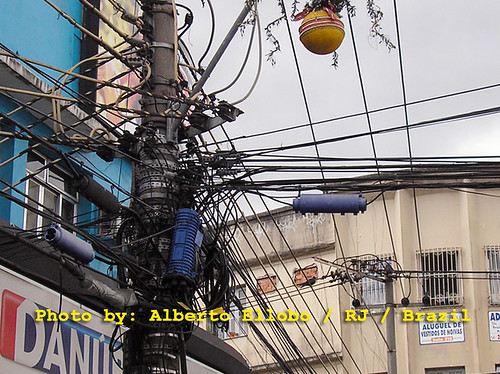
Here are some links for pictures of before/after. For more images, you can search for images of Lei Cidade Limpa SP or Lei Cidade Limpa São Paulo (we use the tilde here, you can remove it if you prefer)
http://www.flickr.com/photos/tonydemarco/sets/72157600075508...
http://www.flickr.com/photos/sueluzfotos/page4/
http://ftorquato.wordpress.com/2008/08/26/gilberto-kassab-de...
And here's a link with a article in Sao Paulo prefecture about this law (google-translated to English).
http://translate.google.com/translate?hl=en&sl=pt&tl...
Cheers, -B