I first bought the HP-15C before my freshman year at Iowa State. I used it through my undergrad EE program and after school continued using it for years. The landscape layout, heft, and feel of the keys were all incredible.
Years later I tried a TI-89 and really couldn't stand it, even though it had all the cool graphing foo and symbolic algebra which is really useful. So I distinguish between the usefulness of the features of the TI-89 and the qualitative feel of the HP-15C.
Even later still I tried the HP-33 for a basic RPN calculator that I could lug around in my backpack and not worry about losing or damaging it. It's really light and certainly doesn't have the feel that the 15C does. The keys have a 'toy' feel to them that I don't like.
All that to say that I probably will try this new 15C, but I'm skeptical. It probably won't have the same heft in the hand, nor the feel of the keyboard as the original. But hey HP, please surprise me!
I still have my HP-41CX, which in my opinion is the greatest calculator that HP or anyone else this side of Calculator Jesus has ever made. Still works perfectly. I doubt it will ever be surpassed.
I think it's great that the 15C is being re-issued. It's another reminder (sorely needed these days) that there was a time when HP made truly great products.
Addition loop test, completed in HP labs. Up to 100X faster than original HP 15c.
"For at least one pair of numbers, we can perform a single addition about[1] 100 times faster than we could in 1982."
Did any of the original owners complain about its addition speed? I'd have thought the matrix operations and numerical integration would be the slow bits. I wonder if you could get this speedup just by better fab technology and upping the clock rate, or if you'd need to go as far as bumping the process size down a notch or cramming stuff closer together.
Edit: it's a limited edition, so presumably they're not doing anything too complicated. I wonder how much a new set of masks cost these days.
The Wiki article[1] suggests a far more interesting story than better fab technology- Apparently these puppies have an ARM core emulating the original processor and operating system, making it possible to build custom firmware if you are so inclined.
I've used and programmed an HP-15C, but it was a novelty even then, 22 years ago. I haven't used my HP-48GX since college. This reimagined 15C might be interesting if you could access the ARM CPU or there are extended features. I don't see any references to I/O though.
For practical interactive calculation I get a lot of use out of calc http://sourceforge.net/projects/calc/. It's algebraic, but I find that less error prone than RPN.
Now that you mention it, the HP-48GX is another calculator that found a niche: land surveying. It's so popular in that particular line of work that you can barely get your hands on a used one on eBay. There are still third-party cards for COGO and data collection that surveyors and some civil engineering professionals rely on. I still have my HP-48GX from college along with the manual and it's a standard tool of the trade:
Science left the limitations of the pocket calculator behind, ages ago. Any field of analytic research, be it science, engineering, finance, etc. the values you manipulate on a day to day basis are no longer scalars, but tend to be matrices, often very large ones.
TI got this part right, sort of: the TI calculators while clumsy for data entry have 2D screens and make apparent the various interpretations of mathematical objects, as equations, matrices, and graphs.
Really? I think the n-spires are going in the wrong direction for post-academic users, trying to approach the input (full alphabetic keyboard) and UI of a computer on a severely size-constrained piece of hardware, rather than focusing on what I think stand-alone calculators should be about: an easily manipulated tool for back of the envelope calculations and first-try graphing of equations. By allowing easily accessible alphabetic entry, it makes typing in complex equations easier, but anyone who is not constrained by academic requirements will be using matlab/R/mathematica/etc. for that, rather than trying to type using a small non-qwerty keypad, and getting results on a too-small screen.
I understand the logic of something like the n-spire for academics (though I'd prefer an HP 50g): get a piece of hardware that can do enough math for testing purposes, but limited in usability and/or IO, to hopefully reduce cheating, and have students use it in class and for homework so they are familiar with it by the time they have to use it on a test. However, it's sad that an entire industry (calculator hardware) requires poor and time-wasting data and formula entry characteristics (mostly based on required form factor) simply to avoid having students cheat on tests (both in-classroom and standardized tests).
How much time and effort would be saved if students could use smartphones or tablets with a customizable calculator UI? Calculators' limited screen size, inflexible input, and limited market size compared to smartphones/tablets ensures they will remain hamstrung.
And TI still hasn't gotten it through their heads that RPN should be a basic supported calculator mode, not left to a 3rd party to implement as an optional program.
Disclosure: I grew up with a TI 30+, 34, 68, 81, 83+, and then a HP 48gx -- which got me through most of HS and college, hence my strong preference for RPN. My HP48 broke (screen damage, no fault of HP's) and I never replaced it. I've used a calculator probably a single-digit number of times since then.
Pocket or table calculators can still be useful for quick calculations. Of course you won't use a 15C for any seriously heavy lifting anymore- you have MATLAB and Mathematica for that now- but M & M are poor tools for spur-of-the-moment computation.
> but M & M are poor tools for spur-of-the-moment computation.
I don't really see how this is the case. The only advantage of a stand-alone calculator, now that I'm done with standardized test taking, is its portability. And when most of my work takes place in front of a computer anyway, I might as well just keep a copy of Mathematica humming so I can use it as soon as I need to do a calculation.
In fact, having to pull out a standalone calculator, turn it on, and adjust my frame of mind from "computer" to "standalone calculator" would probably be very bad for spur-of-the-moment calculations.
Well, I was thinking of more when I'm talking over my whiteboard with a co-worker, or something like that. Also, M & M are not light on the footprint... I don't especially enjoy leaving them open.
That's definitely true when you're in a conference room working over something, though nowadays I'm just using a scientific calculator app on my Android phone instead, since that means I've got one less device to keep track of.
Am I the only one that would prefer a HP 42s? $300 on ebay? are you kidding me? I know, I've got "RPN Calculator" on my android phone, but it's just not the same.
I haven't used a 42s, but the 50g is an excellent calculator and I used it quite a bit in college. I did lots of work with matrices and it is by far the best calculator I've ever used for that purpose.
With a one-line segmented lcd display, I wouldn't care that it's flashable even if it ran linux. There's no way I'd get one.
The 12c I can somewhat understand. It has a niche; it's accepted on a bunch of financial-related exams where other more advanced calculators are banned, and many financial geeks can operate it instinctively. Common Finance operations accessible with one or two keystrokes, combined with RPN, make it invaluable even though modern calculators are far more expandable and capable than the 12c.
However, I see no place for the 15c. You could buy a HP 50g on amazon for the cost ($100) of the limited edition 15c.
In testing situations where the 50g is not allowed, there will be no need for numerical integration or matrix manipulation, so a cheap calculator like a HP 300s or TI 34 would be perfectly adequate at a small fraction of the cost.
You see no place for the 15c? Just because the graphing 50g is in the same price range? Solely based on "testing situations"?
Kinda sad, actually. I have an original 15c and still use it regularly. For me, a calculator is about assisting me in the calculations I need, not in walking me completely through them. A single line LCD display has proven completely adequate for situations where I need to take logs, calculate n^x, etc.
Why must a calculator do everything for you? I remember a time when numerical integration, matrix multiplication, and derivatives were done by hand. Additionally, we weren't allowed calculators in tests.
Pardon the rant, but it is comments like the statement above that make me appreciate having studied under people like David Huffman (of Huffman Coding) and instilled in me the ability and desire to derive things from first principles.
The quality of the keyboard cannot be overstated, both the size and the physical feedback is perfect.
The 50G is a lot larger than the 15C which fits easily into a normal pocket.
The 15C is like an Apple product: it has the needed functionality and wastes no space or keys on fancy flashy fluff you're never going to use: "Perfection is achieved ... when there is nothing left to take away".
Programming it is very intuitive, "getting" the 15C is the best indicator I had in high school for figuring out who understood math and who just carbon copied the teacher.
On one thing we agree. There is rarely if ever a place for calculators when doing real math, for which I have a healthy interest and appreciation. But that's not because advanced calculators offer an advantage; rather, it's because they are usually irrelevant and at best only marginally helpful in the construction of proofs.
However, as you say from your educational experience, calculators can simply be banned on any lower math exams where they're inappropriate, or the exams can often be designed so that the calculators, even with CAS and equation solving capability, offer no meaningful help.
Like I said, if advanced functionality is not needed or wanted, a vastly cheaper HP 300s or TI 34 today would be more than adequate.
My point is that students are not going to spend $100 on a non-graphing calculator, and professionals are either going to want a 50g for its substantially improved capabilities, or will not be using a calculator much to begin with.
So that leaves me concluding that 15c limited edition buyers will be professionals with nostalgia for the 15c but little use for calculators these days.
My enthusiasm for graphing calculators (specifically, rpn stack-based graphing calculators) has little to do with graphing, and nothing to do with equation solving or CAS (neither of which I used much on my graphing calculators), but rather simply this: Take the 15c, give it a better display, increase the stack size from 4 to a lot, and make the last few stack levels visible at all times. That's what an RPN graphing calculator gives you, and that's what's worth $100.
Why must a calculator do everything for you? I remember a time when numerical integration, matrix multiplication, and derivatives were done by hand. Additionally, we weren't allowed calculators in tests. Pardon the rant, but it is comments like the statement above that make me appreciate having studied under people like David Huffman (of Huffman Coding) and instilled in me the ability and desire to derive things from first principles.
I'd suggest that people just like you were saying things just like this back in the HP 15C's heyday... except they were saying them about slide rules. Is there any more merit in your words than there was in theirs?
I've had an HP-16c for 20+ years. Bought it new. I've been a programmer all that time, and probably used it about a dozen times. Unless you're a collector, there is no point to it.
I have a 16c as well (I assume you have one), and if you're a Mac user, the OS X calculator is pretty nice and can be configured into horizontal scientific and programmers RPN modes. Someone put a lot of love into it. Kudos.
The HP-15C is the only calculator that ever became an extension of my mind. It is that good. After 20 years the keys became a little unreliable, so the brain connection snapped; I don't know if I could wire it back in again.
I wonder how the durability and longevity of this arm emulated version will compare to the original. Also, does it use the same buttons cells as the old one?
Well this is cool. It really seems pointless, though. There's already the 35s, and the 48gII is a much better calculator at a lower price, and anybody with a phone can get a far superior graphing calculator. It doesn't even come with wifi.
You underestimate the value of a polished, direct user interface that users have been familiar with for decades. My father has an HP-11c that he still uses on a daily basis, and he can operate it without looking at the keypad.
...And what on earth would you need wifi for on a pocket calculator?
You overestimate the value of a TOY that can only display one line at a time of a four-level stack and obscure programming lanugage. This is not an attempt by HP to create something useful to people. It is an art piece, one that happens to be convenient to make, it's basically a 12C with different printing and programming. And it's $99. $99 is a ridiculous price for a TI-83, and beyond ridiculous for a 15C.
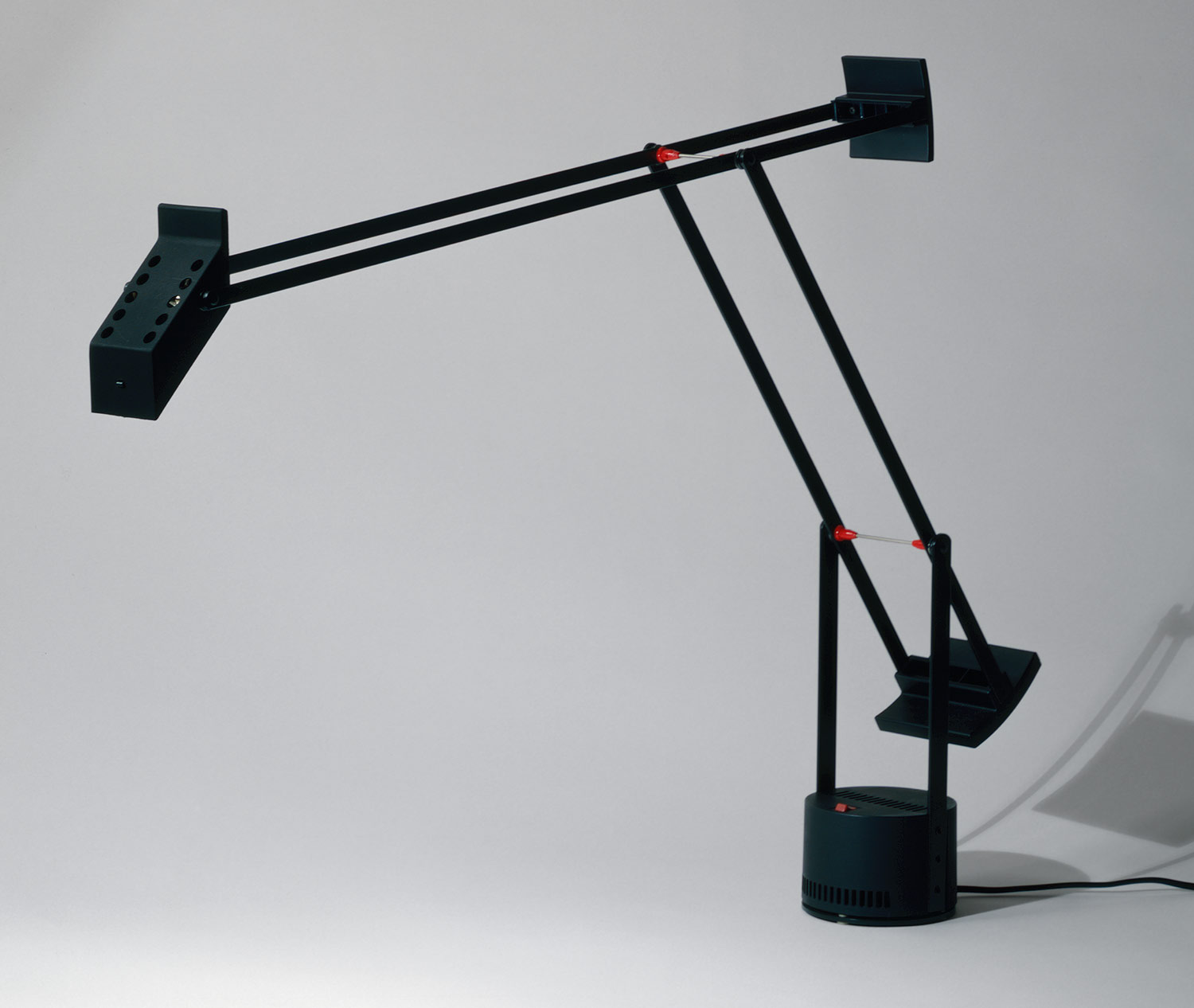
A brand new one costs at least $400. It doesn't have wi-fi. It doesn't even have a CPU. All it does is shine light on your desk, the same way a $5 lamp from Ikea or Target can. Nevertheless it's still a very popular product and plenty of people buy it even for $400 - partly because it is well constructed, partly because of the recognizable classic design, and, yes, partly because of Artemide's marketing and branding efforts. I don't own one, I have no intention of buying one, but I don't have a problem with other people buying them and I certainly wouldn't suggest that the manufacturer shouldn't bother selling them.
Not really. The ability to position and direct the light in that double articulated angle poise lamp is vastly superior to that in a cheapo lamp for a few dollars from a general furniture store.
I certainly wouldn't pay $400 for it but it is the superior product functionally.
The calculator is functionally inferior. You're buying it, if you do, for nostalgia or visual amenity (blurgh looks terrible IMO) and not for its function or ergonomics.
It's not useless. The use is not to do calculations though - it's to bring satisfaction to the owner. And I predict HP will find plenty of takers who feel they'll get at least $99 of satisfaction out of owning one.
Now HP just need to realize the amazing 'value' created by their flop with the Touchpad and release it again. At $99! Take a $4-$600 million dollar hit and create a HUGE base of WebOS users that they can profit off in the next few years!
"User's Handbook was recreated from scratch. Printed and in box. Searchable copy on CD. Manual took forever to get it nearly perfect." according to http://www.hpmuseum.org/cgi- sys/cgiwrap/hpmuseum/forum.cgi?read=192618#192618


Years later I tried a TI-89 and really couldn't stand it, even though it had all the cool graphing foo and symbolic algebra which is really useful. So I distinguish between the usefulness of the features of the TI-89 and the qualitative feel of the HP-15C.
Even later still I tried the HP-33 for a basic RPN calculator that I could lug around in my backpack and not worry about losing or damaging it. It's really light and certainly doesn't have the feel that the 15C does. The keys have a 'toy' feel to them that I don't like.
All that to say that I probably will try this new 15C, but I'm skeptical. It probably won't have the same heft in the hand, nor the feel of the keyboard as the original. But hey HP, please surprise me!