Some TCL TVs will refuse to work if you don't connect them to the Internet. I'd never buy one in the first place, and if I did, I'd return it immediately as defective. Eventually retailers will get the message and stop carrying the despicable brand.
Some TCL TVs will refuse to work unless you connect them to a network with access to the home base. Fortunately, my Samsung S95D doesn't (lovely matte OLED screen), and is perfectly usable without a network connection or even setting up the Smart TV features. The only controls I need on it are volume and HDMI input switching. Like you, I use two AppleTV 4Ks as sources, one tied to my US Apple ID, one for the UK one. At some point, I will also connect my Oppo UDP-203 4K Blu-Ray player, but I haven't needed to in the 2 years since I moved to the new house.
It's surprising the DoD didn't require stockpiles of spares for every electronic component in these phenomenally expensive and long-lived weapon systems. This is after all the one arm of the Federal Government that is both good at logistics and planning, and was able to deliver frozen ice cream and other amenities to the most remote Forward Operating Bases in Afghanistan.
They generally do stock parts. I was able to order a part when I was in the USAF for a near-obsolete machine (which still used core memory!) and it showed up within a week. Still in it's original EMP and environmental-proof packaging from the late 1960's.
Aircraft can get their service life extended a couple of times before they're parked for good (the B-52 is an extreme example). And the supply system eventually runs out. First of replaceable modules, then the boards, and now the chips.
Man that was such a crushing loss, one of so so so many incredible companies being gobbled up, to steal their value add from the world, to be added to the legion of supplicated talent at the titan's feets.
This industry would be so much healthier, we'd have so much less of all this bullshit, this fuckery, if immortal ultra wealthy companies weren't allowed to forever keep eating their fucking young until there's no one left.
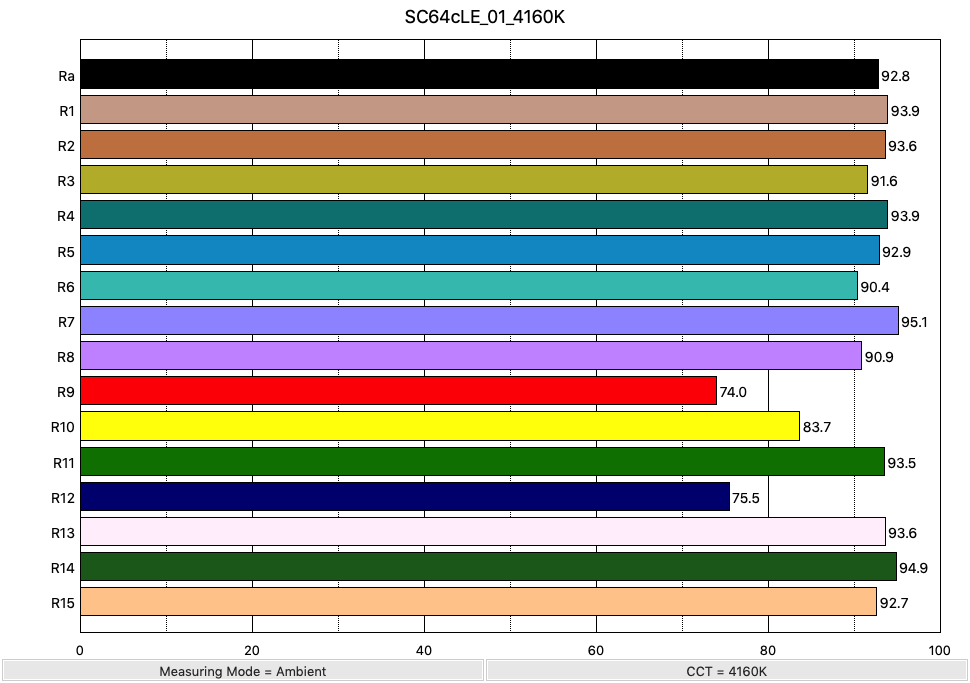
Not to mention the Color Rendering Index (CRI) metric Ra does not weigh the R9 (deep red) so many forms of lighting don't try to render it correctly to save costs.
This is truly an (accidental?) setback of color reproduction as it has progressed over time. For LED lights R9 is also crucial for skin tones which makes it so bad to just leave that out. Now, the mass produced LEDs are even optimized for CRI at all are virtually all excluding R9, which may be one of the main quality issues that many people perceive with LEDs vs eg incandescent. There’s of course more to it but R9 probably has a disproportionate effect for being a ”minor detail”.
It is not reported often by the manufacturer, but SSI and TLCI numbers can be a better metric if available. They are used by the Broadcast/Photography community to match the spectrum's similarity to Sunlight.
TM-30 for general illumination, since it's based on human perception, not on what's best for a sensor like TLCI. Particularly the overall Rf and the h1 bin (skin tones) will tell you the most. Also color temperature accuracy if you want to match it with natural lighting and other lights.
Ugh. CRI doesn't include R9, so CRI 100 doesn't mean 100% replicating sun light / Incandescent Light bulb? Are there any LED that actually does a decent job in colour representation?
As in the classic paper "Wide-area traffic: The failure of Poisson modeling" by Vern Paxson (author of GNU flex) and Sally Floyd (legend in the world of TCP/IP congestion control):
That's why in 2020 the FCC belatedly mandated SHAKEN/STIR to authenticate Caller ID in the US using public-key cryptography. Deployment is still work in progress, and it does not cover SMS/MMS, however.
A bigger problem is Russia or Saudi Arabia using the SS7 signalling network to track their dissidents in the US because those legacy telco protocols have basically no authentication whatsoever, and won't blink if a Saudi Telco sends Verizon a MAP message saying "what is the cell location of Jamal Khashoggi's phone?"
Of course, but the real purpose for those buttons is to allow Google, Meta et al to build a marketing dossier of the websites you visit. Made a little less effective with cookie partitioning, but that's where browser fingerprinting kicks in.
Cynical exploitation of publishers who are desperate for any revenue stream or virality in a collapsing ad market.


reply