It is somewhat hackable, but not to the extent that a computer is. Sometimes laws have some unintended loopholes that can be exploited for benefit if it isn't something obviously malicious.
But there are often vaguer higher level principles that can stop the fun, involving concept like "reasonable person" and "good faith" which are interpreted by humans. But this also doesn't happen always. Sometimes people do get away on technicalities, though many may suspect corruption in those cases, but sometimes the law is indeed powerless against certain novel tricks. There is no general answer.
You're right that academic exams also measure something along the lines of instruction following / obedience / willingness to jump over hoops for no good reason etc. and that's often a good signal for most kinds of jobs.
I think the first semester, or at least half of that, you should go to every lecture until you develop taste for what's useful. By the time you do your master's you should have a good sense for what classes are serious and have useful lectures and where you can just cram last minute because it's a bullshit class and where you're better off studying from a textbook.
Because "know more" isn't actionable. Knowing more is achieved by studying but not necessarily more time spent studying, but well spent effort. Staring at the page for hours and saying "I don't understand" doesn't help. Solve exercise problems, explain the material to fellow students, discuss it with them, make mind maps, bullet point summaries, work through derivations step by step, etc. There are many techniques.
At the end of the day though what matters is what you know. Furthermore, if it's a serious subject, it shouldn't matter whether you learned it from this teacher or from another school and teacher, as long as your knowledge is correct. Knowing the idiosyncracies of this particular teacher should not factor into the grade. A serious subject can be learned on one continent and examined on another. Bullshit courses are all about learning pet peeves and hobby horses of a particular teacher.
It would be good to see the effect of access to AI during preparation on those who previously achieved top 10% points in exams of similar topics before. I suspect they would benefit further.
My apologies for coming off as over-enthusiastic, I am currently obsessed with this study. Here is another quote:
"The negative learning effects are larger for students with higher initial achievement. The differences in the estimated full (6-10 month average) effects are substantial, with a 50% gap between the most negative effect (-24 percent) for the highest tercile and the least negative (-16 percent) for the lowest tercile. "
Not top 10% as you asked, but the closest to what you asked. My working hypothesis is that top performance is highly correlated with willingness to work hard, and AI decreases the motivation to work hard.
Interesting. Top academic performance is mostly correlated with conscientiousness (willingness to work hard and keeping track of things) and intelligence. And I'd add motivation and interest to that too.
I think if you take a physics class where the student is intelligent and intrinsically motivated through their own interest (I admit this is rare) then AI probably helps.
I think if they are intelligent, intrinsically motivated, and willing to pursue knowledge beyond what the class requires, it probably helps.
That last part is key. Intrinsic motivation doesn't mean you pursue it outside normal bounds. My kid loves soccer, its her second favorite thing in the world, she has an absurdly high tolerance for physical discomfort while playing, but she doesn't play it at home. There's other things she's rather do, such as play with her toys.
When you move the bar to something even less interesting to most kids like science, you're going to have a pretty huge falloff. You're basically selecting for kids who choose to do it in their spare time. I know a lot of smart kids (I run a boyscout troop, my wife a girlscout troop, both with lots of high achievers), and none of them do this.
I think a substantial minority of students like subjects beyond what the class requires. They go to extracurriculars to learn more interesting math and science, or are history buffs who read about it on their own time etc. These are the people who as adults move things forward and solve novel challenges so it is important to equip them well.
Tell that to ios’ autocorrect that seems to really suck at it lately. I’d like to have an llm that doesn’t screw up and replace actual words with what it probabilistically thought I was saying.
Except that it will get it wrong infrequently but often enough that you should really proof-read the result properly. All of which you end up taking more time than if you wrote proper if the first case.
No, it takes less time. This is the same kind of take as the teacher's "writing a cheat sheet is so much effort that you might as well spend it to learn the material". Lol, no it takes less time, that's why people do it.
there might be several gaps before that, even. From the top of my head:
- text description to 3D geometry gap: you can't easily describe complex geometry in a language that's common and convenient to both humans and machines
- 3D geometry to physical model gap: material , geometrical constraints induced by manufacturing (machines, tools, costs, …)
- physical model to model fit for simulation gap: meshing, constraints, stress modelling, …
- simulation outcome to fitness assessment gap: now you have a high-dimensional and numerically heavy simulation to weigh against a non-rigorously defined acceptance criteria
- simulation outcome to geometry profiling gap: how do you even start to guide the LLM into the vast space of possible changes to apply to the 3D geometry and reboot that loop?
LLMs don't strike me as a particularly relevant technique to apply here, to be honest.
You can probably keep this kind of unconstructive comments to yourself. Even if this was a place to discuss one's beliefs, nobody was attacking yours to begin with.
I mean I can link a conversation with Claude that says it knows about materials and various details on their various strength but I don't think that'll convince you of anything.
Indeed, it won't: I can link a conversation with XYZ-bot that tells me that I'm handsome and my ideas are brilliant and I'm en route to tremendous success. The point is that LLMs are, by design and current models norms, sycophantic and incapable of describing their own knowledge and workings/processes. This is not a matter of "my opinion vs yours", that's what few minutes spent legitimately trying to understand how this works will tell you.
Scandinavia and the Nordics are quite fancy and refined for Americans. Lagom, hygge, fika, the minimalism, the enlightened equality and solidarity, good education, little crime, highest happiness ratings, even prisons are like hotels, etc makes it a kind of imagined lifestyle that's cozy and thoughtful and so on.
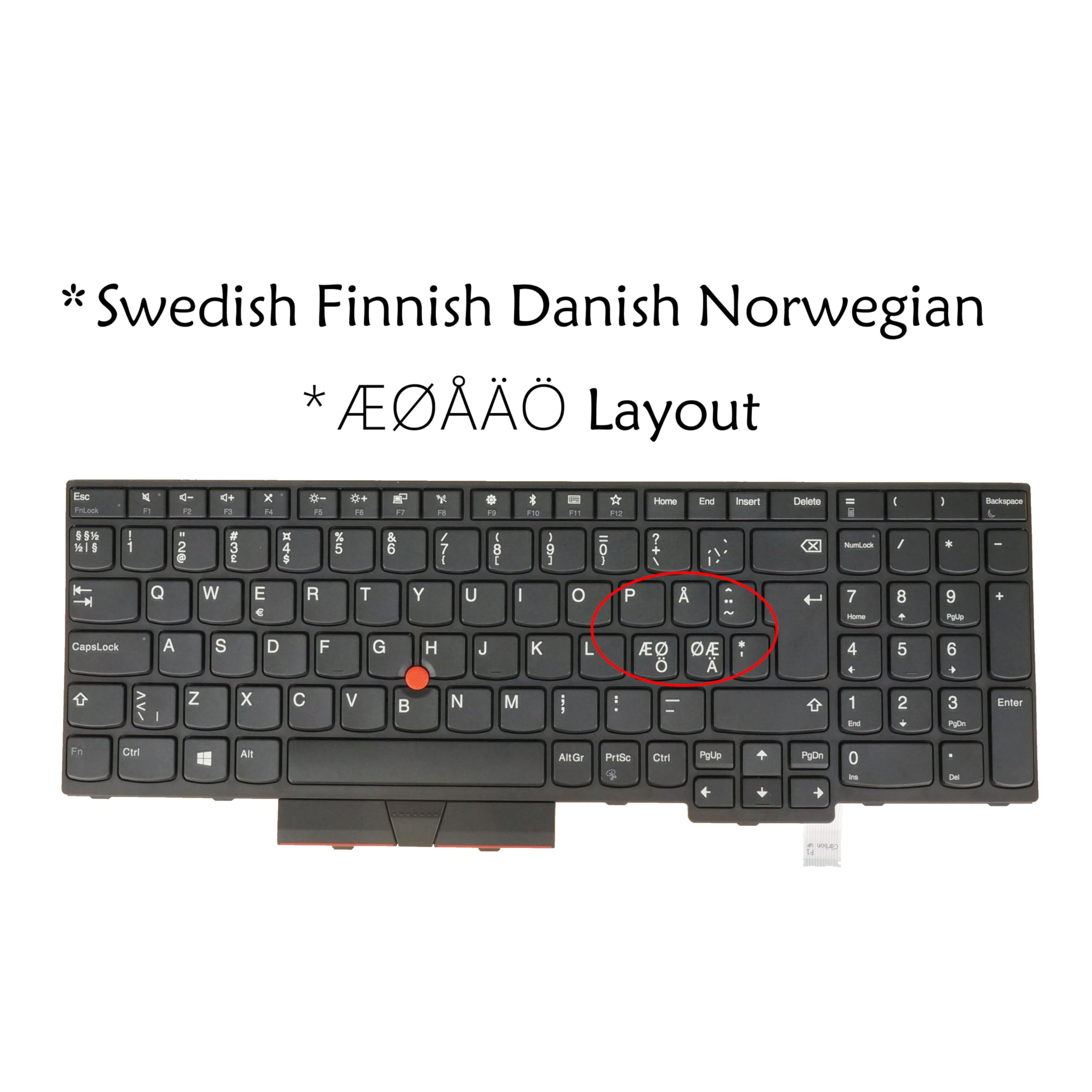
Just to make things worse, the Scandinavian languages use different versions of what have historically been the same letters, and collate them differently. E.g. Norwegian has æ (Ä), ø (Ö), å, collated in that order. Technically the Swedish variants are not part of the Norwegian alphabet, but they're typically collated with their modern Norwegian equivalents.
At least in Norwegian, ae, oe, and aa is also traditionally collated as if they were using these letters, so a word starting "aa" comes at the end of the alphabet, after z, oe and ae....
But they are on different keys on keyboards, annoyingly, leading to one "ÖÆØ" key and one "ÄØÆ" key on Scandinavian keyboards (not to mention the horrible "½§§§½|" key!).
If you spend your time reading reviews of books about other books that talk about the words of other writers who wrote about what others wrote, you start to believe that anything complex must be language-related.
Try to do a mechanical or electrical engineering degree coasting only on internally narrated words. It won't work. It can work in soft fields where all criteria are about what words other humans like to hear and there is no other complex external arbiter.


But there are often vaguer higher level principles that can stop the fun, involving concept like "reasonable person" and "good faith" which are interpreted by humans. But this also doesn't happen always. Sometimes people do get away on technicalities, though many may suspect corruption in those cases, but sometimes the law is indeed powerless against certain novel tricks. There is no general answer.
reply